How To Read an Electric Motor Nameplate
Electric motors are built to standardized specifications ensuring safe and predictable performance. North America standards are defined by NEMA, while IEC standards apply internationally. A nameplate is the primary reference for how the motor is designed to operate. It provides essential electrical, mechanical, and thermal data that determines proper installation and operation. Understanding the nameplate is critical for correct motor selection, installation, and reliable operation.
Published:
Jan 7, 2026Read Time:
~5 minutesTags:
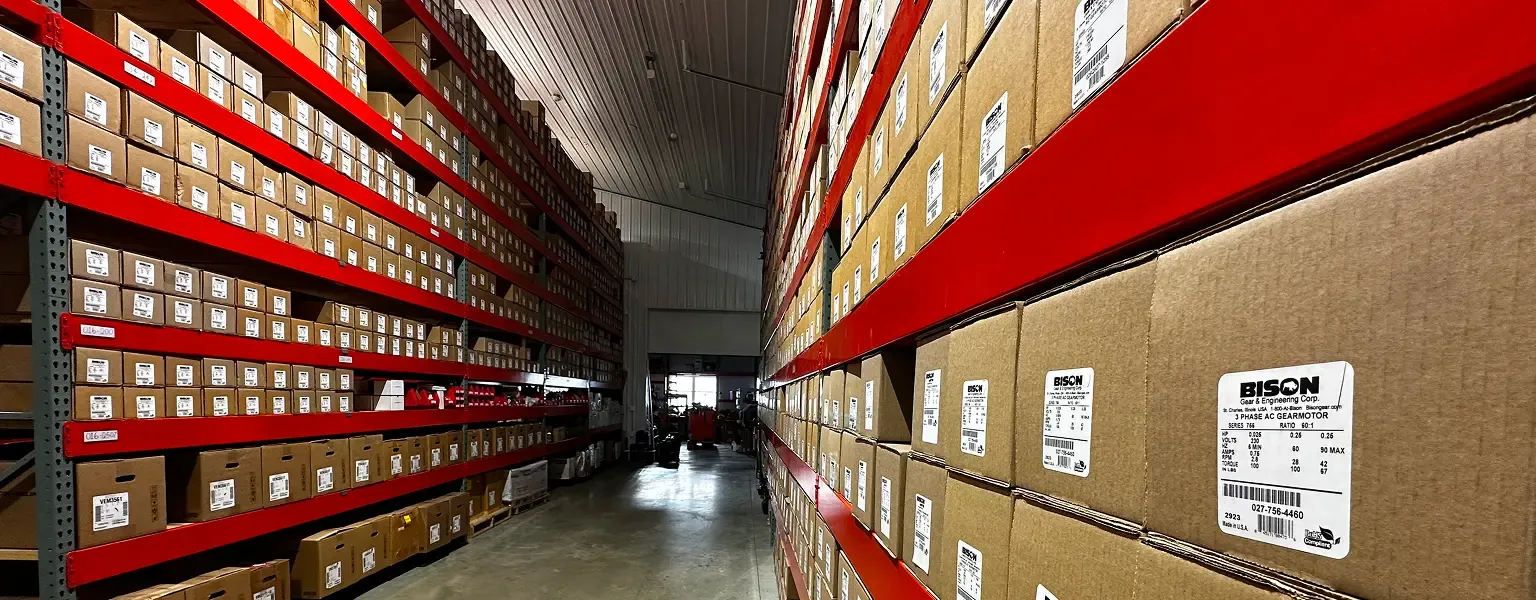
Electric motors are manufactured to standardized specifications to ensure predictable performance, safety, and interchangeability. In North America, these standards are established by NEMA (National Electrical Manufacturers Association), while IEC (International Electrotechnical Commission) standards apply internationally.
The primary way a motor communicates its electrical, mechanical, and thermal characteristics is through the motor nameplate.
A motor nameplate is a permanent data record attached to the motor frame. It defines how the motor must be powered, mounted, protected, cooled, and loaded. Every value on the nameplate exists to prevent misapplication, overheating, inefficiency, or premature failure.
Understanding how to read a motor nameplate is essential for proper motor selection, installation, wiring, VFD compatibility, overload protection, troubleshooting, and replacement. This document explains each common nameplate field and how it affects real-world motor operation.
(HP / kW) — Horsepower / Kilowatt Output
This value represents the mechanical output capability of the motor at rated speed. It defines how much torque the motor can deliver continuously without exceeding its thermal limits.
Horsepower and kilowatts are interchangeable units of mechanical power.
Horsepower to kilowatts:
HP × 0.746
Kilowatts to horsepower:
kW × 1.34
(RPM) — Rotations Per Minute
RPM indicates the rotational speed of the motor shaft at rated load and frequency.
Motor speed is directly tied to input frequency. For example, a four-pole motor operates at approximately 1800 RPM on a 60 Hz power supply and approximately 1400 RPM on a 50 Hz supply.
Many motors list slightly lower RPM values such as 1750 or 1785 RPM. This difference is known as slip. Slip is the percentage difference between synchronous speed and actual rotor speed and is required for torque production in induction motors.
(FR) — Frame Size
Frame size defines the physical dimensions and mounting geometry of the motor, including shaft diameter, shaft height, bolt pattern, and mounting face or base configuration.
NEMA and IEC frame systems are different and are not interchangeable.
Some motors include appended letters after the frame size to indicate special configurations:
- C indicates a C-face motor with threaded mounting holes
- D indicates a D-face motor with clearance holes and a larger flange
- H is used on some 56 frame motors with multiple mounting options
- J designates a jet pump motor with a stainless threaded shaft
- JM indicates a pump motor with a mechanical seal shaft
- JP indicates a pump motor with a packing seal shaft
- S indicates a short shaft motor
- T indicates a modern (post-1964) T-frame motor
- U indicates an older U-frame motor
- Y indicates a special or custom mounting configuration
- Z indicates a special shaft design
(PH / ~) — Phase
This identifies whether the motor operates on single-phase or three-phase power.
Single-phase motors use two AC power lines and are typically limited to across-the-line operation. They are not well suited for VFD use due to their internal starting components.
Three-phase motors use three AC power lines, operate more efficiently, and are compatible with variable frequency drives for speed control.
(VOLTS) — Input Voltage
The voltage rating indicates the approved operating voltage or voltages for the motor.
This may be listed as a single voltage, such as 230V, or as multiple voltages or ranges, such as 208-230/460V. Multiple voltages reflect different winding configurations.
All electrical ratings on the nameplate apply only at the listed voltage and frequency. Operating more than ±10% outside the rated voltage can reduce efficiency, increase current draw, and shorten motor life.
(HZ) — Frequency
Frequency defines how many AC cycles occur per second, typically 50 Hz or 60 Hz.
Frequency directly affects motor speed. Dual-rated motors often list two RPM values corresponding to each frequency.
(ENCL) — Enclosure Type (NEMA)
The enclosure type describes how the motor is protected and cooled.
Common enclosure types include:
- ODP (Open Drip Proof) — Openings allow airflow over windings; suitable for clean indoor environments
- TEFC (Totally Enclosed Fan Cooled) — Sealed enclosure with an external cooling fan; most versatile
- TENV (Totally Enclosed Non-Ventilated) — No external fan; relies on passive cooling
- TEAO (Totally Enclosed Air Over) — Designed to be cooled by airflow from the driven equipment
- Explosion Proof (XPFC / EPFC) — Designed for hazardous locations as defined by electrical codes
(IP) — Ingress Protection Rating (IEC)
IEC motors use IP ratings to indicate protection against solid objects and liquids.
Examples include:
- IP20 — Protected against fingers; no liquid protection; clean indoor use
- IP44 — Protected against small objects and splashing water
- IP55 — Dust protected and resistant to water jets; common outdoor rating
- IP65 — Dust tight and resistant to low-pressure water jets; washdown areas
- IP66 — Dust tight and resistant to high-pressure water jets
- IP67 — Dust tight and resistant to temporary immersion
- IP68 — Dust tight and suitable for continuous submersion
Higher IP ratings increase protection but may reduce cooling efficiency.
(CLASS / CL) — Insulation Class
Insulation class defines the maximum allowable winding temperature.
Common insulation classes include:
- Class A — 105°C, rarely used today
- Class B — 130°C, common in open motors
- Class F — 155°C, common in TEFC motors
- Class H — 180°C, used in inverter duty motors
- Class N — 200°C, IEC applications
- Class R — 220°C, extreme environments
(DES) — NEMA Design Letter
Design letters describe starting torque and current characteristics.
- Design A — Medium torque, high inrush current; fans and pumps
- Design B — Medium torque and current; most general-purpose motors
- Design C — High starting torque, lower inrush; conveyors and crushers
- Design D — Very high torque, high slip; hoists, presses, elevators
(CODE) — Locked Rotor kVA Code
This letter indicates inrush current per horsepower during startup.
Letters progress from low inrush (A) to very high inrush (V). Higher letters mean higher starting current requirements, which impacts breaker and transformer sizing.
(SF) — Service Factor
Service factor indicates allowable overload capacity.
A motor with a service factor of 1.0 is designed to operate only at rated horsepower.
A motor with a service factor of 1.15 can operate at 15% above rated horsepower under proper conditions.
(PF) — Power Factor
Power factor measures how efficiently electrical power is converted into useful work.
It is the ratio of real power (kW) to apparent power (kVA). Lower power factor results in higher current draw and reduced electrical efficiency.
(IE / EFF) — Efficiency
Efficiency indicates how effectively electrical energy is converted into mechanical output.
Efficiency is expressed as a percentage or by classification:
- IEC classifications range from IE1 (standard) to IE5 (ultra premium)
- NEMA classifications include Energy Efficient and NEMA Premium
Higher efficiency reduces operating costs and heat generation.
(FLA / AMPS) — Full Load Amps
This is the current drawn by the motor when operating at rated horsepower, voltage, and frequency.
Lower FLA for the same horsepower generally indicates higher efficiency.
(SFA) — Service Factor Amps
This indicates current draw when operating at maximum service factor load.
(CT / VT) — Constant vs Variable Torque
Variable torque loads have torque requirements that change with speed, such as centrifugal pumps and fans.
Constant torque loads require the same torque at all speeds, such as conveyors, mixers, crushers, compressors, and positive displacement pumps.
Duty Cycle
Duty cycle defines how long the motor can operate at rated load.
Most industrial motors are rated for continuous duty. Some motors, such as hoist or lift motors, are rated for short or intermittent duty and are not intended for continuous operation.
(AMB) — Maximum Ambient Temperature
This specifies the highest surrounding air temperature at which the motor can operate within its insulation limits.
40°C is the standard ambient rating. Higher ambient ratings often require horsepower or service factor derating.
(TEMP RISE) — Temperature Rise
Temperature rise defines how much the winding temperature can increase above ambient temperature.
It is used together with insulation class to determine thermal limits.
(TP) — Thermal Protection
Some motors include internal thermal protection that automatically shuts the motor down if excessive temperature is detected. Motors without internal protection require external overload devices.
Altitude
This specifies the maximum altitude at which the motor can operate without derating. At higher altitudes, reduced air density limits cooling effectiveness.
(DE / ODE) — Bearings
Many nameplates list bearing information for the drive end (DE) and opposite drive end (ODE). Bearings are the primary wear components in an AC motor.
Connection Diagram
The connection diagram shows how motor leads must be configured for the rated voltages and rotation direction.
Categories: